Start with the garment you will wear
Put on the top, dress or shirt that will frame the necklace. Our editorial approach is to see the neckline as a boundary you can work inside, across or below. A chain close to an open collar creates a different outline from a long pendant over fabric. Neither is inherently more flattering. Decide where you want the eye to pause, and include the jacket or extra layer you expect to wear rather than choosing from a bare-neck photograph alone.
Use a long pendant as one reference
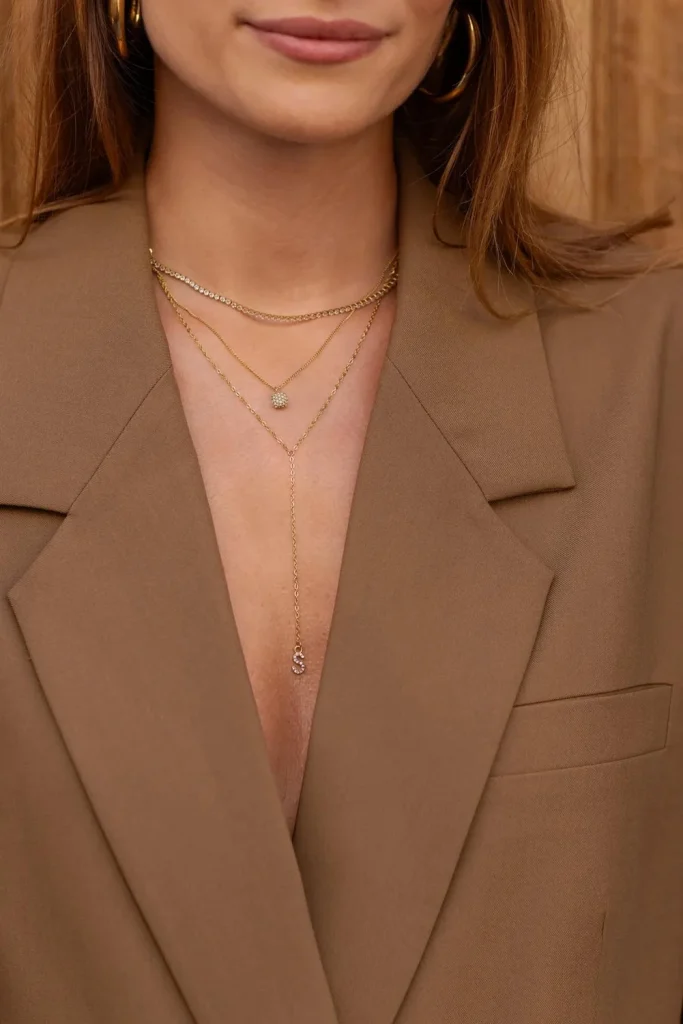
Long necklace with square initial charm is described as stainless steel and suitable for wearing alone or alongside other necklaces. The word long helps identify the design family, but it is not a substitute for the item’s actual dimensions. Our styling suggestion is to compare where a pendant of that type sits against a button placket or a plain top. Check that you enjoy the relationship between the charm and the garment’s own details before adding more jewellery around it.
Compare a Y-shaped outline
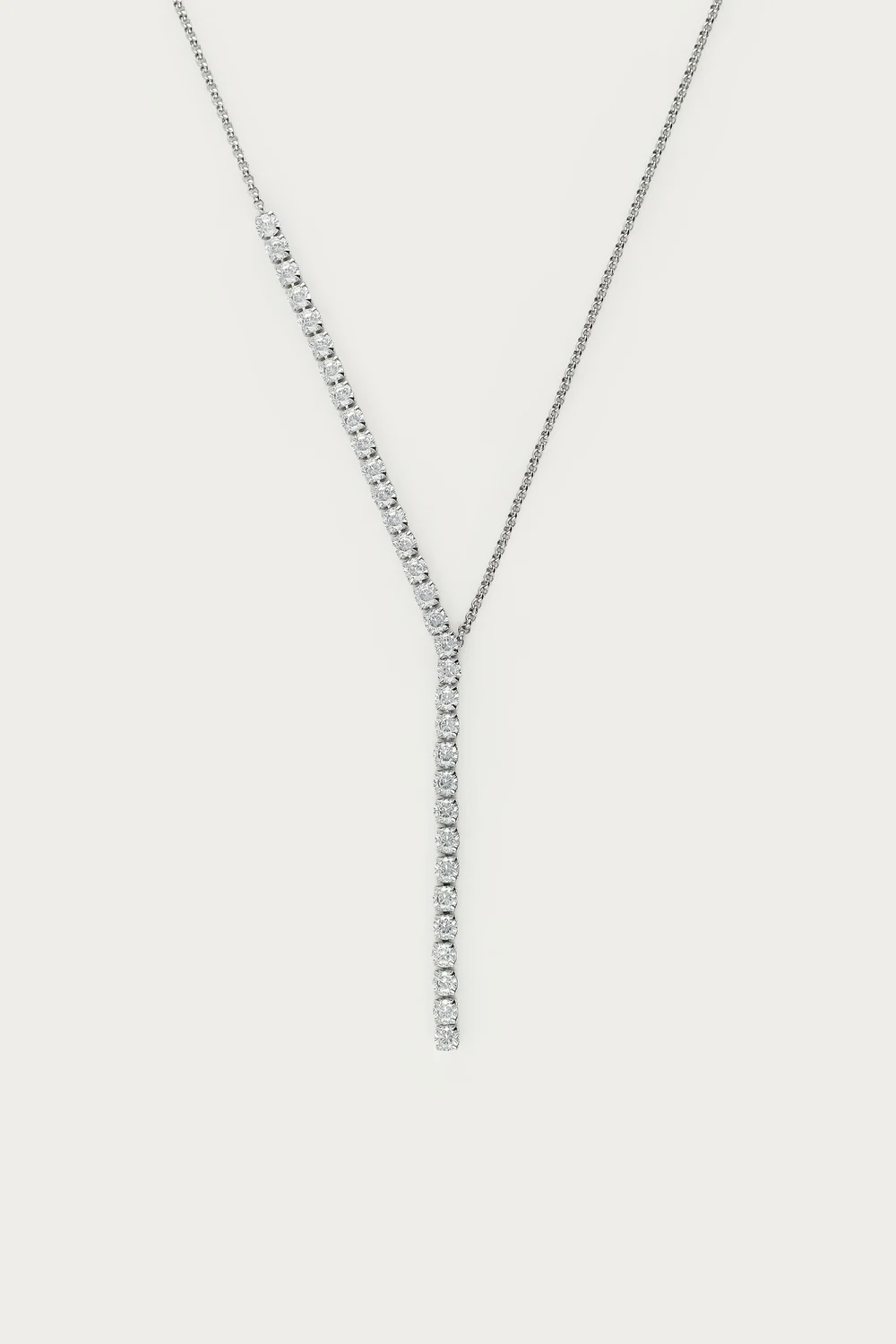
The Tennis y-necklace with rhinestones offers another silhouette: the Y form changes the outline as well as the visual emphasis of a necklace. Try imagining that vertical detail inside an open neckline, then compare it with a single pendant over fabric. This is an editorial exercise, not a claim that one shape belongs to a particular face or body type. Do not estimate its length, weight or fit from the product photograph; read the specification for the selected version.
Read length and adjustment separately
A chain’s stated length, any extension and the pendant’s own drop can affect the final position in different ways. Look for each detail in the selected item information instead of assuming that all necklaces in one category use the same adjustment system. If a dimension is missing and placement is important, ask the seller before choosing. A familiar necklace you already own can provide a useful personal comparison when measured consistently, but it cannot establish another item’s exact fit.
Check the view while moving
Once you can try the necklace on, look at it while sitting as well as standing. Notice whether the pendant settles behind a collar, meets a button or catches a textured knit. Adjust only where the item is designed to allow it. There is no universal centimetre position that resolves every garment. Our preference is a placement that feels intentional through ordinary movement, even if that means choosing one necklace for an open shirt and another for a high neckline.
Keep a small personal reference
Note the full name and dimensions of a necklace whose placement you like, along with the neckline you wore it with. A photo can help record the outfit, while written measurements keep the comparison useful when the next product image uses a different model or crop. Remember to check material and care information separately from length. A gold-coloured or gold-plated steel design is not solid gold, and adding pearls or other details can change the care routine without changing the necklace’s category name.
← Back to the journal