Begin with an anchor bracelet
Choose one bracelet you want the arrangement to revolve around. Bold minimalist bracelet with open circles is a useful reference: its description identifies circles and delicate links and suggests wearing it alone or with other jewellery. The open shapes already give it a recognisable rhythm. Our editorial starting point is to put that kind of distinctive piece on first, then decide whether another bracelet adds a different texture or simply repeats the same idea.
Change one visual element
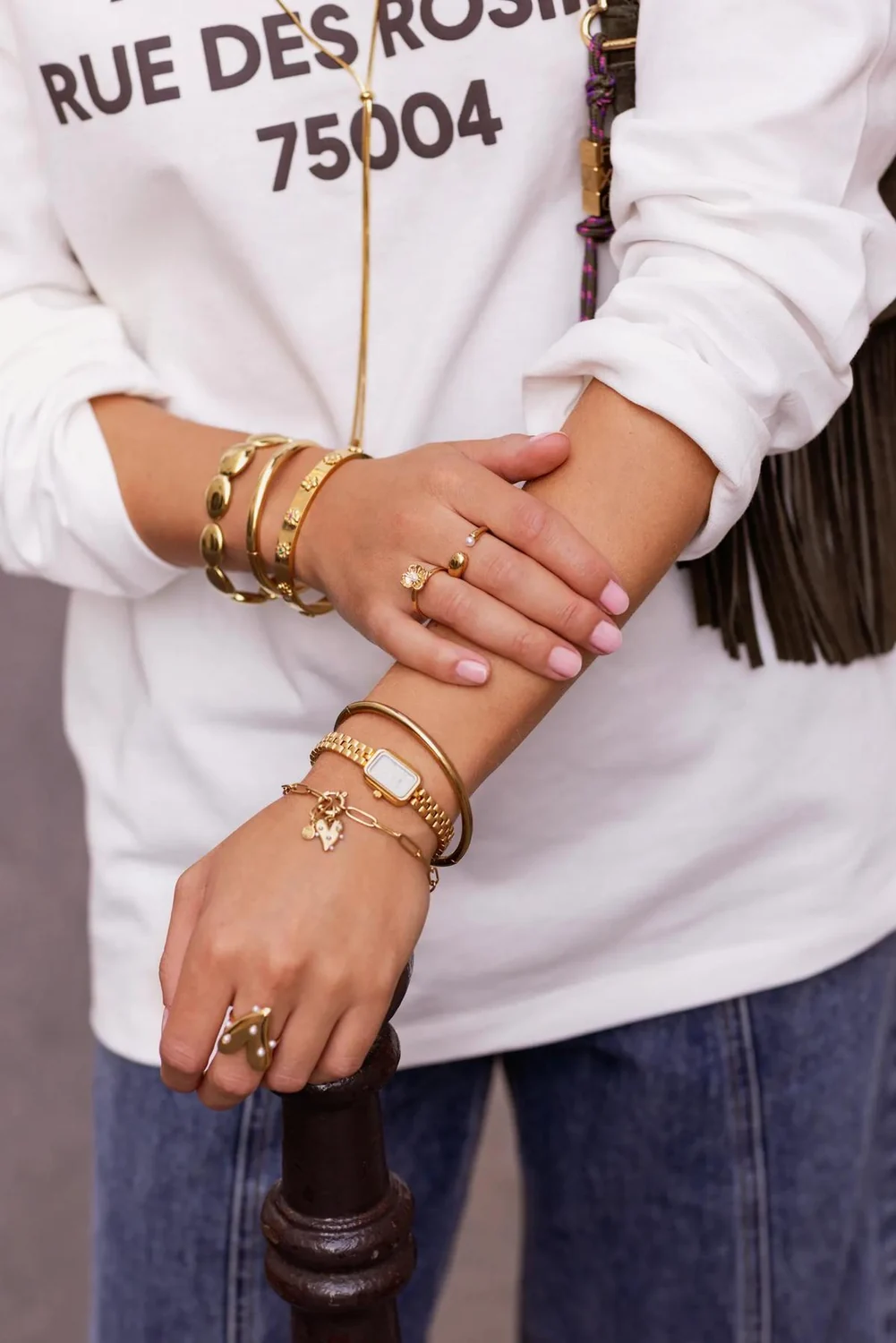
Try a fine chain beside an open-circle design, or contrast a smooth outline with a more textured one. You do not need to change colour, width and texture all at once. Keeping two of those elements quiet makes it easier to see what the new piece contributes. There is no fixed number of bracelets in this approach; the combination can stop as soon as it feels complete. A carefully chosen pair can offer as much visual interest as a larger collection on the wrist.
Make room for fastenings
Fasten each bracelet before adding the next, and check that you can still reach the closures when it is time to take them off. A charm can look appealing in a still photograph while repeatedly meeting another clasp in motion. Move your hand, turn your wrist and rest your arm on a table. These editorial checks help you choose a practical arrangement for your own routine, without promising that a particular chain or stack will never catch or rub against another piece.
Treat metal colour as a choice
The open-circle bracelet’s options distinguish silver stainless steel from gold-plated stainless steel. Those terms identify a material and finish; they do not mean solid silver or solid gold. For a quiet stack, repeat one colour and vary the outlines. For a more noticeable contrast, let a silver-coloured piece sit beside a gold-coloured one and repeat that contrast elsewhere only if you enjoy it. There is no need to turn every ring, buckle or earring into a matching set.
Leave space for sleeves and work
Check the stack with the sleeve you plan to wear. A wide cuff, close knit or jacket can change how bracelets sit and how often you need to rearrange them. Consider the tasks ahead as well: typing, carrying a bag or working with your hands may make a smaller selection more comfortable. Our styling preference is to remove the piece that gets in the way, even if the full arrangement looked balanced while the arm was still. The day is part of the design.
Reset the stack after wear
Take the bracelets off individually and keep their material information in mind before cleaning. A steel chain, a cord bracelet and a pearl detail need not share the same care routine. Store the pieces separately enough to avoid leaving charms and links caught together. If you want to repeat a favourite stack, note the order or take a personal photo. That preserves a styling idea while allowing each bracelet to remain an independent piece for a different combination tomorrow.
← Back to the journal