Identify how the bracelet fits
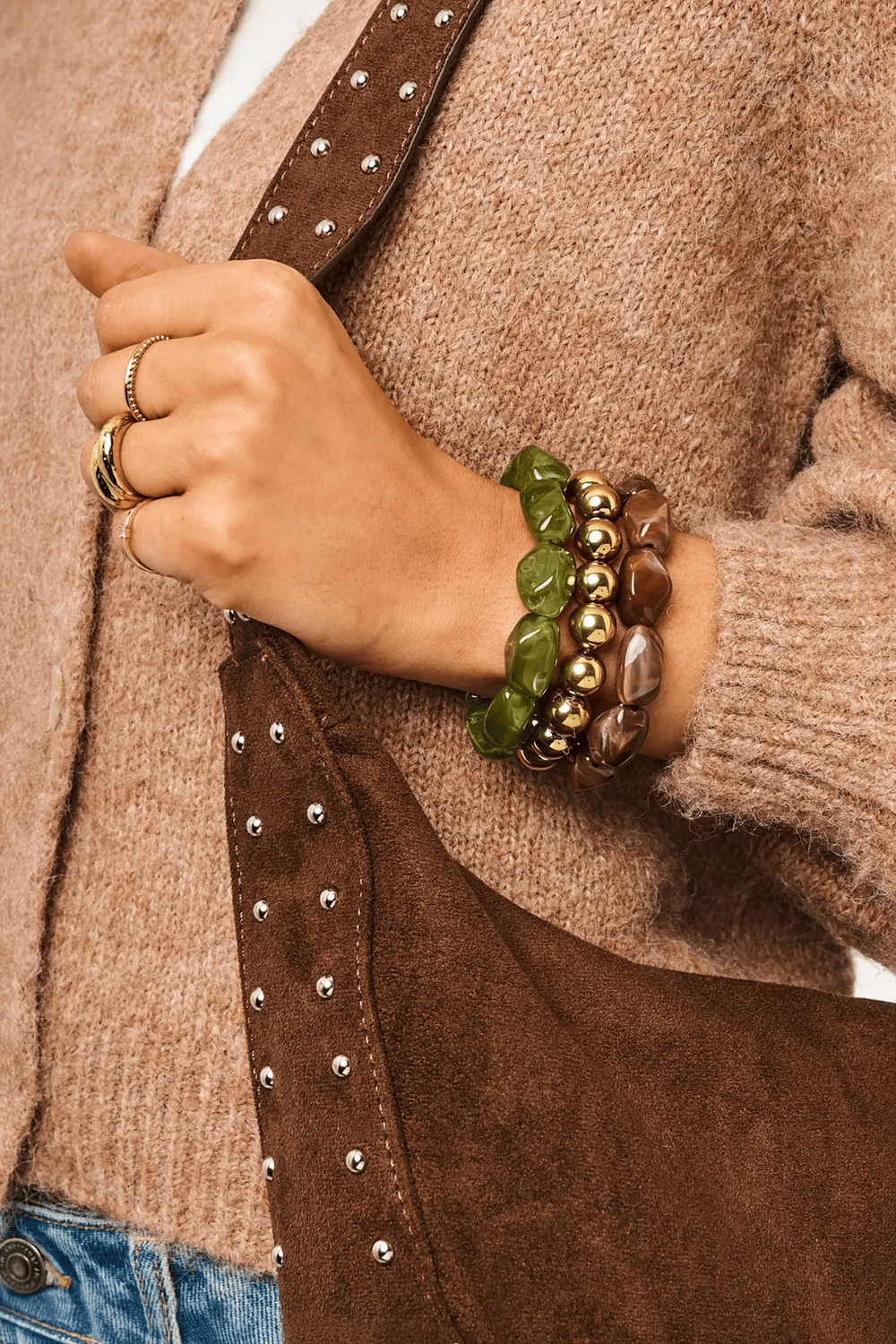
Begin with the construction rather than the colour. describes its Olive green cord bracelet in satin look as polyester and adjustable; its Initial brown lurex rope bracelet is also described as an adjustable cord design. These examples show why a bracelet category should not be treated as an all-metal collection with one fitting method. Find out whether the chosen piece uses an adjustable cord, a clasp, a rigid opening or another system before comparing sizes.
Use measurement as a starting point
As an editorial preparation step, measure the wrist you intend to wear the bracelet on and note the result clearly. Compare it with the dimensions or range supplied for the actual item. Do not add a universal amount of extra space from an unrelated guide: a close cord and a bracelet intended to move more freely can feel different at similar measurements. If the seller gives no usable range and fit is uncertain, ask for that information before selecting the piece.
Do not turn one size into every size
A one-size label describes the seller’s option structure; it does not establish that a bracelet fits every wrist. Even an adjustable item has a particular construction and an intended method of adjustment. Read those directions rather than pulling harder or modifying a closure to reach a preferred position. The polyester cord example is useful precisely because its stated adjustability is item-specific. It should not be borrowed as a property of the next bracelet simply because both appear beside each other.
Check the closure in ordinary use
Try fastening and removing the bracelet in the way you will normally manage it. Can you reach the closure, and does the available adjustment let the piece sit where you want it? Our practical suggestion is to check this before adding a watch or other bracelets around it. A decorative initial charm may be the visual reason for choosing a cord bracelet, but the fastening determines how easily that detail becomes part of your routine. Appearance and operation deserve equal attention.
Choose the movement you enjoy
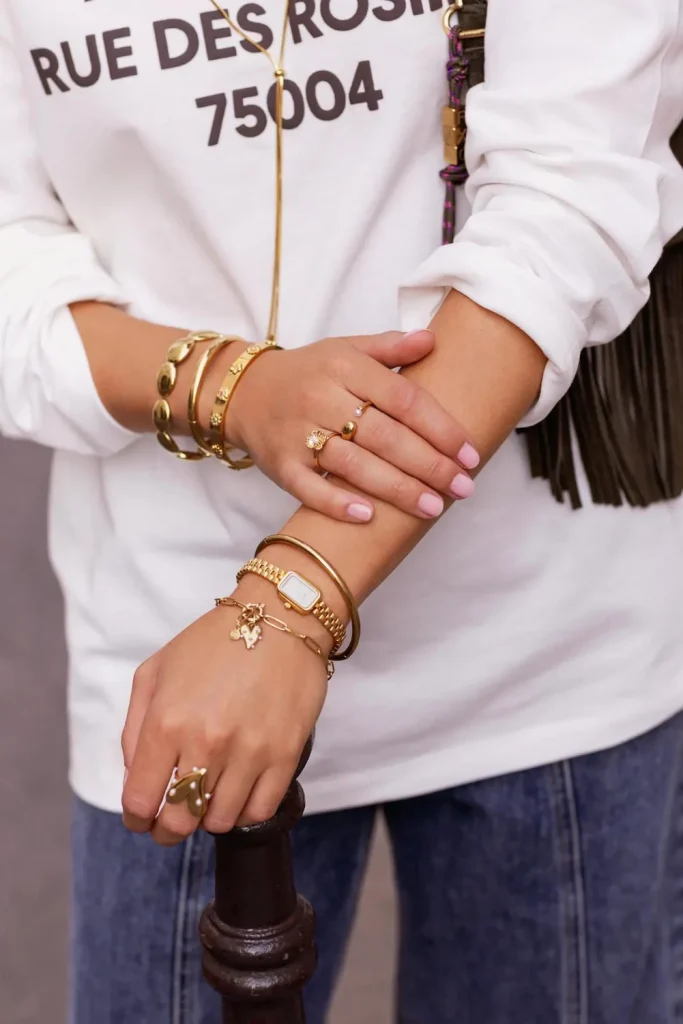
Turn your wrist, hold a cup and rest your arm on a table while trying the piece. Notice whether you prefer it to stay relatively close or move more freely. These are personal fit preferences rather than a numerical rule for all bracelets. If you stack several pieces, repeat the check with the complete arrangement; neighbouring charms and links can change the experience. Reduce the stack or choose another design if you spend more time rearranging it than enjoying it.
Match care to the actual materials
A polyester cord with decorative components should not automatically inherit the cleaning method for plain stainless steel. Read the full item information and any instructions for the cord, charm or finish. Keep the bracelet dry or remove it where the maker directs, and store it without leaving the closure under unnecessary tension. Save a note of a fit you enjoy alongside the exact product name. That gives you a useful reference without assuming that every adjustable or one-size bracelet will behave the same way.
← Back to the journal