Start with the mood of the combination
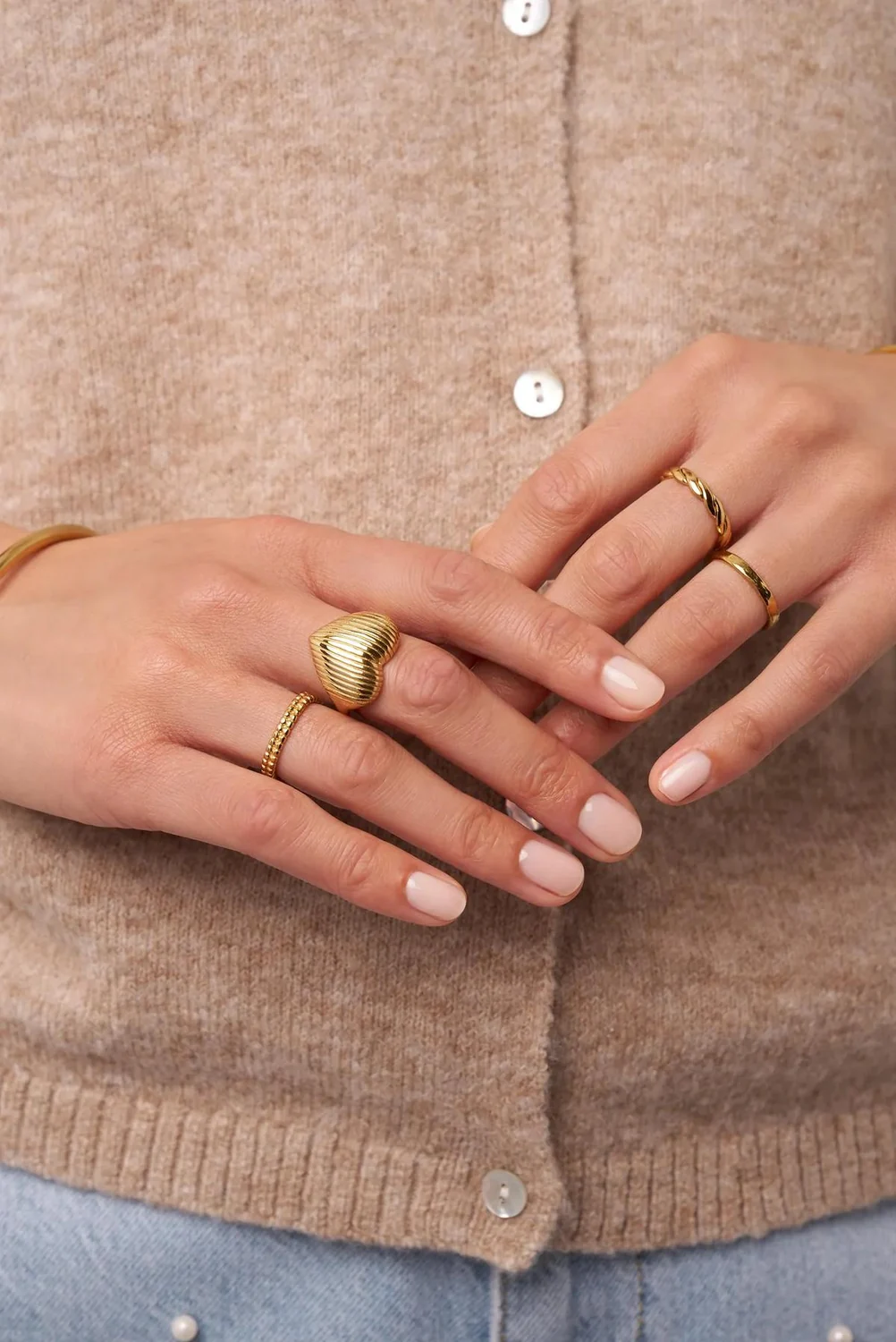
Dutch ring-stacking guide, dated 23 October 2026, describes both minimal and bold arrangements. It discusses wearing several rings on one hand or on the same finger, beginning with subtle rings and adding a statement piece. Use that as a framework rather than a requirement to fill the hand. Our editorial first step is to decide whether you want an everyday outline or one noticeable shape, then choose the rings that serve that intention.
Place the quieter bands first
Put on the simplest rings before adding a larger design. Try them across different fingers, then compare that outline with two compatible bands on one finger. The aim is to see the spaces as clearly as the jewellery. Leave out any position that feels crowded when you close your hand. A stack is a styling arrangement, not a reason to tolerate a tight fit or to force two shapes together when their edges repeatedly press against each other.
Add one expressive detail
A heart, a sculptural outline or a textured surface can give a small arrangement its focal point. Love ring heart locket is explicitly described as adjustable and suitable for solo wear or stacking. That makes it a specific example of a ring intended for either approach. It does not mean every ring can be adjusted. Follow the directions for the selected item, and keep a fixed-size band in the size and shape in which it was designed to be worn.
Mix colours with a visible reason
The official Dutch guide presents mixing gold-coloured and silver-coloured rings as a styling option. Try a colour contrast while keeping shapes simple, or repeat a similar curve across two different finishes. These are visual choices rather than rules about a person’s skin tone. Read the individual material labels too: gold-plated steel is not solid gold, and a silver-coloured finish does not by itself establish sterling silver. Appearance and composition answer different questions.
Test an ordinary hand movement
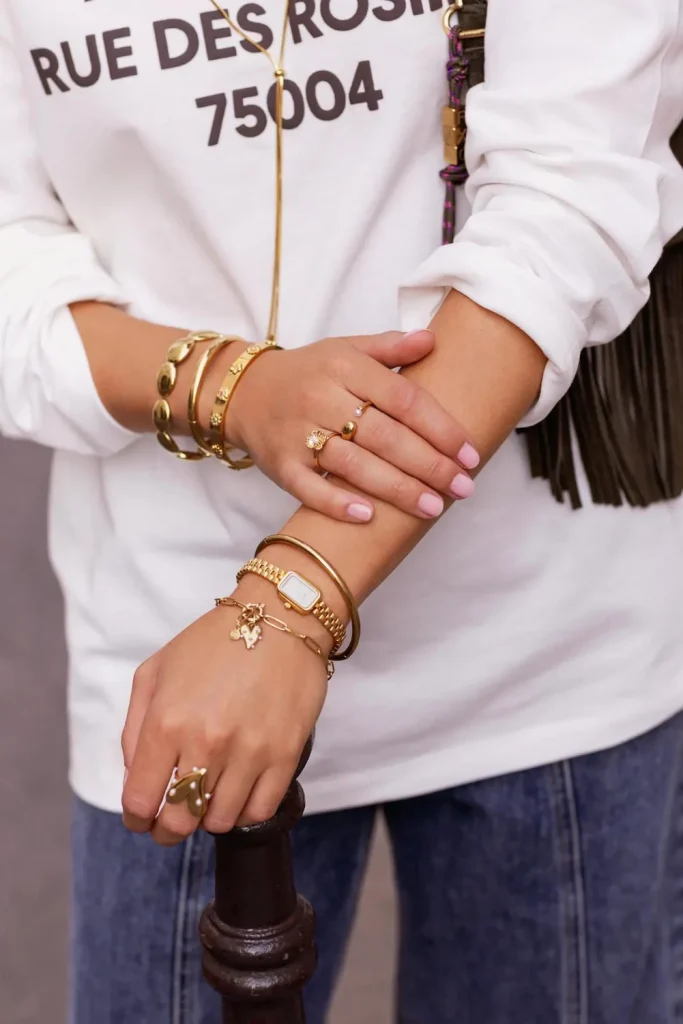
Bend and straighten your fingers, hold a handle and rest your hand as you would while typing. Notice whether a high setting or broad band changes the comfort of a neighbouring ring. Our editorial recommendation is to reduce the arrangement if it interferes with movement rather than adding another piece to hold everything in position. Try the rings on the intended hand; a combination that sits well on one finger cannot establish the fit of another finger or the other hand.
Keep the arrangement flexible
Photograph a combination you like, then take the rings off separately and follow their own care instructions. The next day, the statement piece might be enough on its own. Let the activity and clothing decide how much you want to repeat. An adjustable item still needs its specified fitting method, and pearl, stone or other decorative components still matter for care. A useful ring wardrobe offers choices; it does not need a single stack worn in exactly the same way every day.
← Back to the journal